
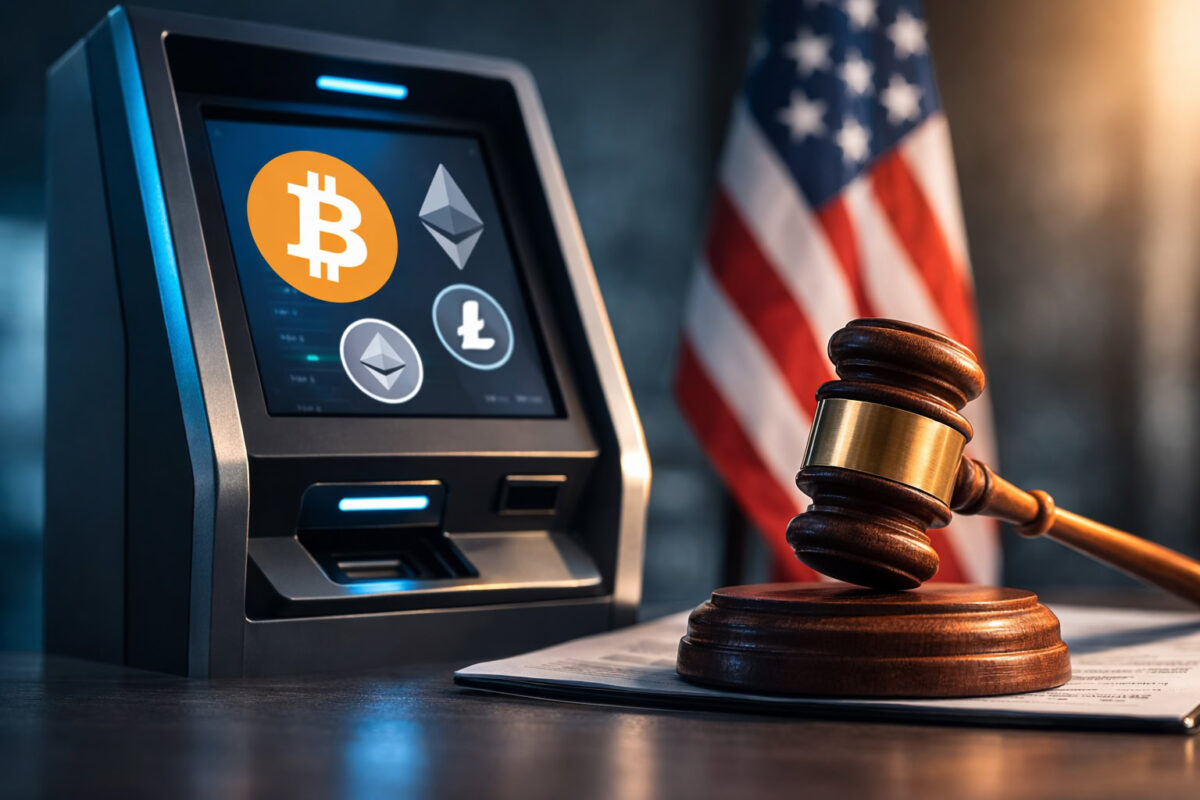
Cryptocurrency kiosks, machines that allow users to exchange fiat currency for digital assets, are rapidly expanding across the United States, drawing increased attention from state lawmakers and regulators. Between 2020 and 2022, the number of cryptocurrency kiosks installations grew from roughly 6,000 to more than 36,000. While these machines offer consumers a convenient way to access digital currency, regulators are increasingly concerned about their role in fraud schemes and the lack of consistent consumer protections across states.
Federal Action
At the federal level, cryptocurrency kiosk operators must register as money services businesses with the Financial Crimes Enforcement Network (FinCEN) and comply with recordkeeping and anti‑money‑laundering requirements under the Bank Secrecy Act. Congress is also taking action on broader digital asset regulatory frameworks through legislation such as the GENIUS Act and the CLARITY Act. States, however, are taking matters into their own hands through kiosk-specific legislation and regulatory enforcement actions. Some states have adopted new rules focused on consumer protections, transparency and fraud prevention. Other states, like California, Maine, Pennsylvania and Washington have brought enforcement actions against digital asset companies that operate kiosks, mostly related to consumer protections and disclosures.
State Action
South Dakota became the latest state to regulate virtual currency kiosks when the Republican Gov. Larry Rhoden signed SB 98 into law on March 11. Effective July 1, the new law requires virtual currency kiosk operators to be licensed in the state as a money transmitter. The law also includes, among other things, user disclosure requirements, fraud protections, transaction limits and fee caps. Transactions will be limited to $1,000 per day, or the equivalent in virtual currency, and $10,000 over a 30-day period. Kiosk operators will be prohibited from charging a user a fee that exceeds 25 percent of the amount of the transaction. Laws with similar restrictions have recently been enacted in Illinois, Iowa, Maine, Oklahoma and Wyoming. Similar proposals in states such as Georgia, Hawaii, Indiana, Kentucky, Maryland and Mississippi are currently moving through the legislative process. Utah HB 72, Virginia HB 665 and identical bill SB 489 have been sent to their states’ respective governors and are awaiting action. These proposals include similar provisions to South Dakota SB 98 such as mandated disclosures, fraud protections, transaction limits and fee caps.
As digital assets continue to move into the mainstream financial ecosystem, policymakers are increasingly focused on ensuring that cryptocurrency kiosks operate with adequate safeguards and transparency for consumers. FOCUS will continue to monitor cryptocurrency kiosk legislation and regulatory activity in state legislatures across the country.
by Will Beacom 3/16/26