

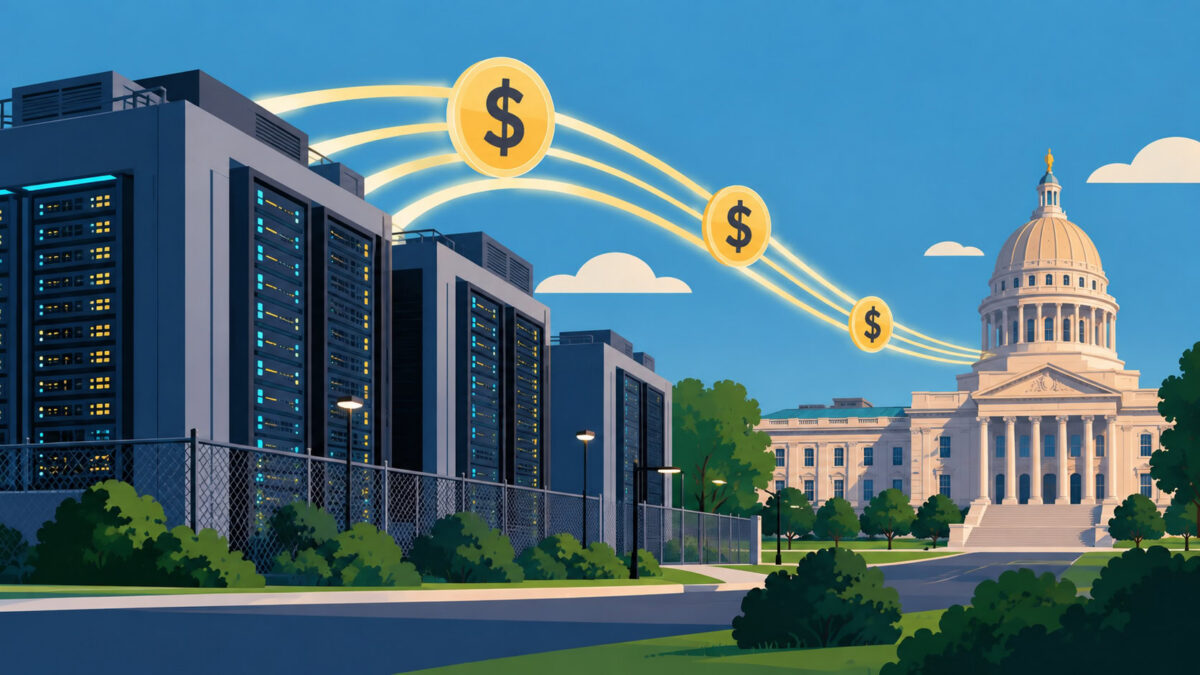
Data center power costs are becoming a central issue for state lawmakers as artificial intelligence and cloud computing drive demand for large-scale computing facilities. These projects can require substantial new generation, transmission and distribution infrastructure, raising a policy question for utility regulators and legislatures: how should the costs of serving exceptionally large new electricity users be allocated?
Why Power Costs Are Drawing Attention
The National Conference of State Legislatures reported in August that, in 2026, 39 states had introduced legislation related to data centers and power. As utilities plan for new large loads, they may need to build or upgrade substations, transmission lines and other infrastructure. If those investments are recovered through rates paid by a broad customer base, residential and smaller commercial customers could share costs tied to facilities that use unusually large amounts of electricity.
At the same time, data centers can provide tax revenue, construction activity and investment and supporters argue that reliable digital infrastructure is increasingly important to the economy. The policy debate is therefore focusing less on whether data centers should exist and more on how utilities should plan for them and assign their costs.
State Approaches Are Taking Shape
- Cost-based rates: Some states are directing regulators or utilities to create separate rate structures for very large electricity users so costs associated with serving them are more directly assigned to those customers.
- Long-term commitments: Oklahoma HB 2992, the Data Center Customer Ratepayer Protection Act of 2026, was signed into law by Republican Gov. Kevin Stitt on May 11, 2026. The law applies to certain new large-load facilities of 75 megawatts or more and requires separate service terms and tariffs. It also requires at least a 10-year service term for covered customers, with a limited exception for certain public power financing arrangements.
- Protection from stranded costs: Oklahoma’s law also requires measures intended to ensure large-load customers reimburse utilities for costs allocated to them, including costs that could otherwise remain if a customer leaves the system or significantly reduces its electricity use.
- Large-load classifications: On June 16, 2025, Oregon Democratic Gov. Tina Kotek signed HB 3546, requiring a separate classification of service for large energy-use facilities. The law directs regulators to allocate the costs of serving those facilities to them and to mitigate risks to other electricity customers.
What Comes Next
The next phase of data center policy is likely to focus on how states balance economic development, grid reliability and customer affordability. Regulators will also have to determine how much new infrastructure is truly attributable to large-load customers and how contracts and tariffs should account for future changes in electricity demand.
As data center development expands, the question of who pays for new power infrastructure is becoming an increasingly significant part of state energy policy.
FOCUS will continue to monitor developments on data center power costs across the country.