

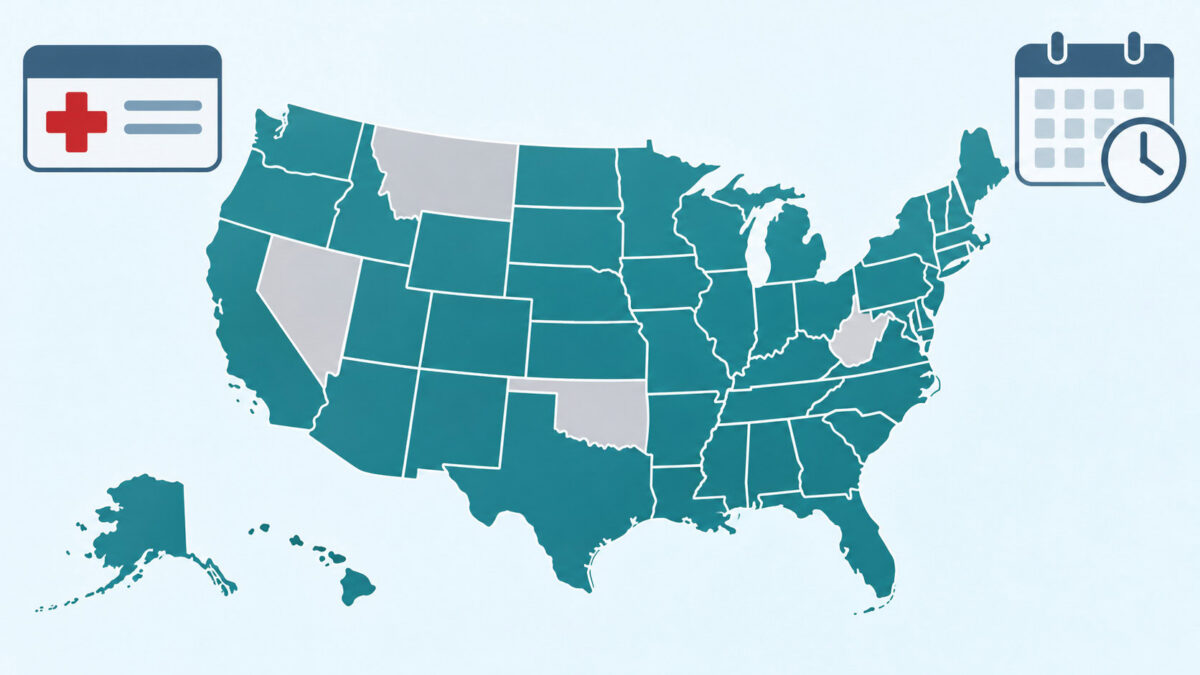
With fewer than seven weeks until the January 1, 2027 deadline, states are racing to finish the systems needed to implement the Medicaid work requirements enacted in last year’s federal reconciliation law, United States HR 1. The law requires adults ages 19-64 in the Medicaid expansion population to document at least 80 hours per month of work, school, job training or community service to keep their coverage. The new requirements will take effect in 44 states and apply to roughly 30 percent of Medicaid enrollees. While a handful of states have already begun enforcement, others are pressing the federal government for more time.
Early Adopters Offer a Preview
Nebraska became the first state to enforce the new requirements on May 1, 2026, eight months ahead of the federal deadline. Data presented at the state’s Medicaid Advisory Committee meeting, and analyzed by the Kaiser Family Foundation, show that 14 percent of new applicants subject to the rules were denied and seven percent of renewing enrollees lost coverage over the summer. Most of those losses were procedural; 84 percent of denied applicants and 92 percent of disenrolled members had not responded to requests for information, rather than being found noncompliant. Arkansas and Montana followed on July 1, though Arkansas is conducting a “soft launch” and will not disenroll anyone until January. Iowa will begin applying what it calls Community Engagement Requirements to new applicants on December 1, with renewals for existing members beginning in February 2027.
Federal Rules Face Legal Challenges
The Centers for Medicare & Medicaid Services (CMS) issued an interim final rule in June that narrowed the medical frailty exemption, restricted self-attestation and required states to verify compliance through a review of claims data. More than two dozen states sued over the rule, and on October 29, a federal court in Massachusetts v. Oz struck down a provision requiring medically frail individuals to also show a functional impairment. The ruling left the rest of the rule, and the January 1 start date, intact. CMS has also signaled that it will audit states and may impose financial penalties for improper implementation.
States Seek More Time
H.R. 1 allows the Secretary of Health and Human Services (HHS) to exempt states that show a “good faith effort” from the deadline through December 31, 2028. However, the CMS rule limits an initial exemption to six months, and states must submit quarterly updates to qualify for further extensions. In early October, five Democratic governors, California’s Gavin Newsom, Maine’s Janet Mills, New Mexico’s Michelle Lujan Grisham, Oregon’s Tina Kotek and Virginia’s Abigail Spanberger, asked HHS to delay the deadline, arguing that late changes in federal guidance left too little time to build and test eligibility systems.
What to Watch in 2027
The requirements will take effect just as newly elected governors and legislative majorities are sworn in, putting implementation on many 2027 session agendas. Lawmakers will need to fund eligibility system upgrades, which Wisconsin’s Medicaid director has estimated will cost about $10 million in the first year, and weigh projected coverage losses. In Iowa, the nonpartisan Legislative Services Agency estimates that roughly 32,000 residents could lose Medicaid coverage. States will also be watching whether CMS approves any good faith extension requests and how it carries out its promised audits.
FOCUS will continue to monitor state implementation of Medicaid work requirements as the January 1 deadline approaches.
By Jordan White, 11/16/2026